
MAY
LCCC adult education helps drive Wyoming’s national success
 CHEYENNE, Wyoming – Wyoming’s adult education programming is receiving national recognition,
and LCCC’s adult education programs are driving that success in southeast Wyoming
by serving hundreds of learners, helping more than 100 earn credentials and connecting
students to employment.
CHEYENNE, Wyoming – Wyoming’s adult education programming is receiving national recognition,
and LCCC’s adult education programs are driving that success in southeast Wyoming
by serving hundreds of learners, helping more than 100 earn credentials and connecting
students to employment.
Once again, Wyoming’s adult education programs performed exceptionally in 2025, ranking among the nation’s best in credential attainment, co-enrollment, measurable skill gains and employment outcomes, according to the U.S. Office of Career and Technical Education.
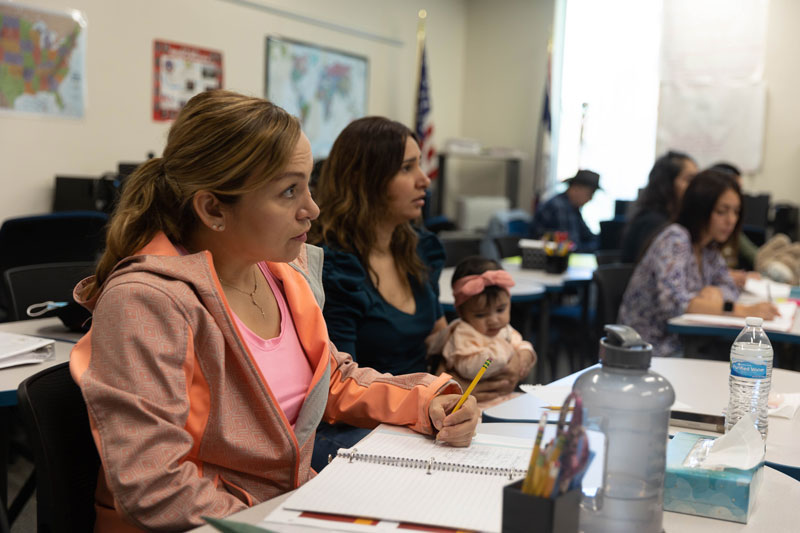
At LCCC, adult education programs help people learn necessary skills for meaningful employment or continued education. In fiscal year 2024-25, the programs served 353 students in Adult Basic Education and English as a Second Language across its Cheyenne and Laramie locations. Among adult education students, 65.34% achieved measurable skill gains, 103 students earned credentials – a larger graduating class than many Wyoming high schools – and 61% reported being employed in the second quarter after exiting the program.
Adult education at LCCC succeeds because of the people behind the program, whose expertise is matched by a deep commitment to the learners they serve, said Tonya Hacker, LCCC’s dean of the Office of Workforce Development.
“We pair that commitment with innovative, flexible instruction that meets adults where they are and connects them to real workforce opportunities,” Hacker said. “And because we work shoulder-to-shoulder with employers, workforce agencies and community organizations across southeast Wyoming, we don’t just change individual lives, we strengthen our entire region.”
LCCC’s adult education programming is part of a statewide system that provides year-round instruction for adults who need stronger academic, language or workforce skills. At LCCC, the program helps students prepare for high school equivalency exams, improve reading, writing and math skills, learn English, build communication skills and transition into college, job training or employment.
Non-credit adult education courses are offered at no cost to students, making the program an entry point for adults who may otherwise face barriers to continued education or better jobs.