
OCT
Grounds crew keeps LCCC safe and beautiful all year
Skilled team ensures campus remains welcoming, functional and ready for all visitors
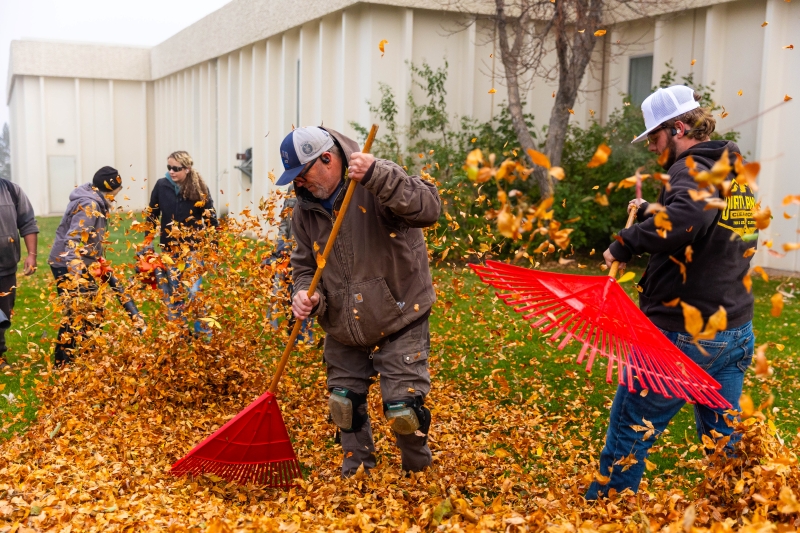
Before sunrise, long before students begin filling the parking lots, a 25-foot tree lies across a campus walkway. By the time the first class starts, the evidence is gone.
“The first thing we do is we go check any kind of hazards, whatever they may be,” said Rick Evelo, LCCC Grounds Maintenance manager.
Rick and his crew had cleared the fallen tree, blown off the sidewalks and restored the path before anyone noticed something had happened. It’s routine for a team that begins every day with the same priority: ensuring the campus is ready for anyone who sets foot on it. The work doesn’t stop when the school day ends. Regardless of the situation, the crew is present, ensuring that the facilities at LCCC provide a safe and effective environment.
“People don’t realize how much we’re here,” said Rick Evelo, LCCC Grounds maintenance
manager. “It’s not just during the week or on weekends. We’re here when it’s dark,
when campus is closed, and when the snow’s still coming down. The work doesn’t stop
just because classes do. Even on those closure days, we’re out clearing drifts, checking
for hazards, getting everything ready for the next morning. This place has to be ready,
no matter the hour or the weather, and that’s something we take a lot of pride in.” 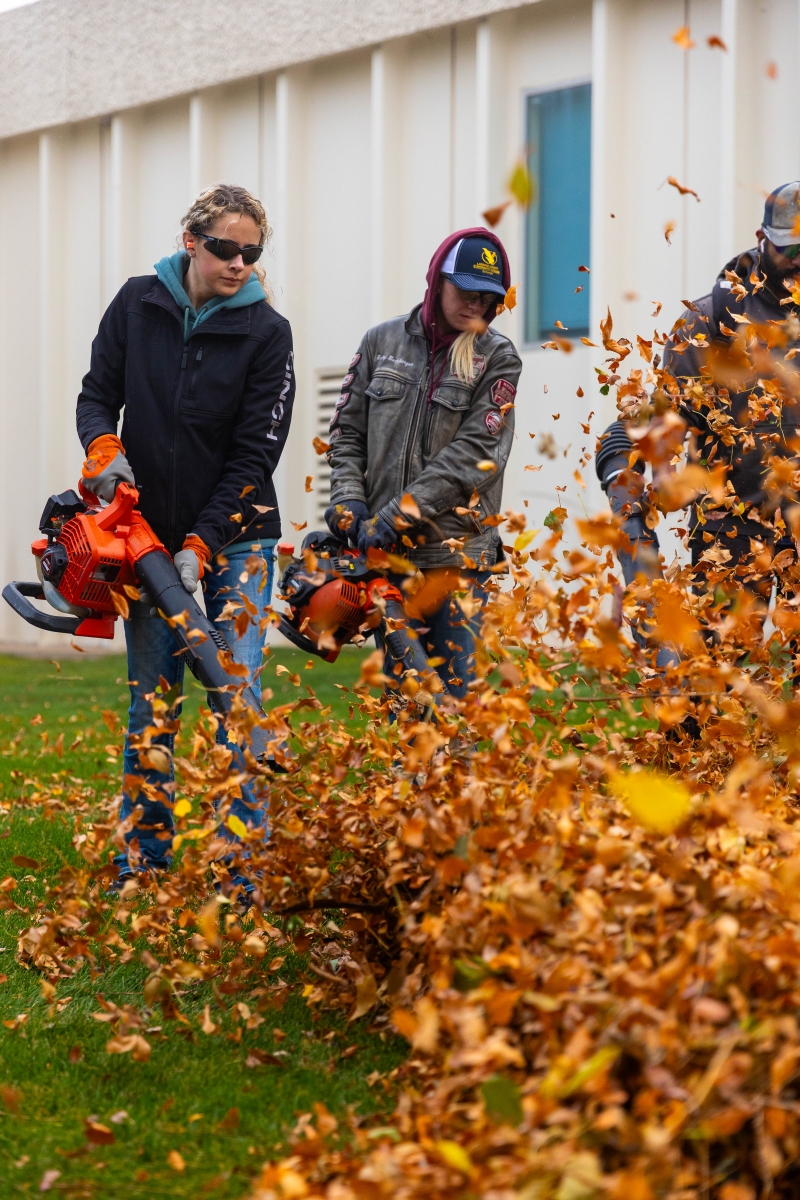
Safety may be their starting point, but it’s only part of what they do. The crew is also responsible for the lawns, flowerbeds, trees, soccer field and more that give LCCC its distinctive look, a campus that feels cared for even in Wyoming’s unpredictable weather.
“The landscape is like a picture frame around a picture,” said Pete Oswald, LCCC Grounds specialist. “It’s the last thing that goes on, but the first thing you see. You only have one chance at a first impression.”
Safety and aesthetics – The foundation of success
Without the grounds crew’s work, the rhythm of the college would stop. Snow and ice may be the obvious threats, but it’s the unseen details—the flow of irrigation, the health of a tree, the slope of a walkway—that keep the campus both functional and beautiful. The results are visible everywhere: flowers near the Fine Arts Building, neat rows of grass outside the Advanced Manufacturing and Material Center, and tree-lined walkways framing paths.
LCCC’s leadership has long recognized the value of a well-kept campus and the role it plays in attracting students and serving the community. President Joe Schaffer and the college’s administration have made investments in staffing and resources that allow the grounds team to build on the strong foundation laid by their predecessors. Each generation of groundskeepers has left its mark, ensuring the next can carry that legacy forward.
“Every job out here takes know-how,” said Pete Oswald, LCCC Grounds specialist. “Between irrigation, turf, and all the little things that make a campus run, you’ve got to know what you’re doing and care about the result. Everyone brings something different to the table, and together we make it work. That’s what I like about this job—every day there’s a challenge, and every day we solve it.”
Each member of the team brings specialized expertise to make that success possible. Rick manages large-scale irrigation across 25 acres of manicured turf, balancing hydraulics and water flow with precision. Pete, Rick said, is the secret weapon..
“Pete is the jack of all trades,” Rick said. “He knows so much about horticulture, trees, plants, and he knows a lot about irrigation. All around, he knows about the trades.”
Caleb Munger has his focus on field and turf maintenance, while Jason Hamilton leads what Pete calls the “exploratory digging,” locating hidden irrigation lines and valves across the property. And La Rita Balken tends to the flowerbeds and trees that give the campus its color and texture.
Those are just a few of the specialists behind the scenes, each with their own craft. What they share is a sense of ownership and pride—an understanding that they are part of something larger, continuing the work of those who came before them and setting the stage for those who will follow.
“Everyone has a specialty, but we all pitch in on what has to get done,” Rick said. “Each person has a niche, but if there’s a huge irrigation repair or whatever it might be, we’re all on the job.”
Teamwork and innovation behind the scenes
When a challenge arises, the crew doesn’t give up or wait for someone else to fix it. They regroup, study the problem from every angle and map out a solution together.
“Let’s go back to the dry-erase board at the shop and draw it out,” Rick said. “We don’t just throw parts at it; it’s easy to buy parts and slap it together, but we want to fix it for the future and for the next crew.”
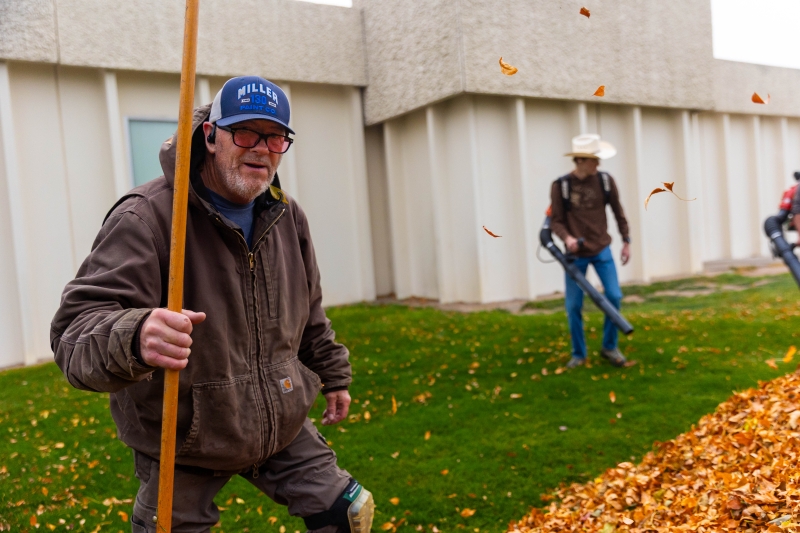 That kind of thinking requires equal parts creativity and craftsmanship. Whether the
issue is a burst irrigation line or a design change for better drainage, the team
tests ideas, trades knowledge and leans on experience gathered from decades of work.
They also reach out to peers across Wyoming’s network of grounds professionals, sharing
solutions and learning new techniques to bring home to LCCC.
That kind of thinking requires equal parts creativity and craftsmanship. Whether the
issue is a burst irrigation line or a design change for better drainage, the team
tests ideas, trades knowledge and leans on experience gathered from decades of work.
They also reach out to peers across Wyoming’s network of grounds professionals, sharing
solutions and learning new techniques to bring home to LCCC.
The quiet precision of that work rarely draws attention, but it shapes every experience on campus. Students walk to class without realizing how much care went into the ground beneath their feet. Visitors see order, not the effort that keeps it that way. The grounds crew’s work, like education itself, is an act of faith in the future, done today so others can flourish tomorrow.