
DEC
Opportunities unlocked at LCCC, but the work isn't over
Yearslong work at LCCC helping students succeed post-graduation continues
 Larry Bauder, a first-generation college student at Laramie County Community College, didn’t know that credits he earned at one college
might not transfer to another.
Larry Bauder, a first-generation college student at Laramie County Community College, didn’t know that credits he earned at one college
might not transfer to another.
“My family couldn’t tell me what a credit hour was,” Larry said. “I can't go to my family and ask those questions, whereas somebody whose parents did graduate already has that background knowledge.”
It’s reassuring, then, for Larry, who is majoring in both accounting and finance in LCCC’s Business & Accounting Pathway, that he has a secure path to transfer with the Express Transfer Agreement, or ETA. The program ensures that students in LCCC programs can move to the University of Wyoming with their credits fully recognized and their degree plans aligned.
“Knowing my credits are guaranteed to transfer makes a huge difference,” Larry said. “Any classes I take at LCCC automatically count toward my degree at the University of Wyoming, and I even get an adviser from UW who looks over my credit hours and makes sure I’m on the right track to transfer.”
For students like Larry, that structure is the heart of the Express Transfer Agreement. ETA isn’t just a promise that credits will move smoothly from one institution to another — it reflects work LCCC took on through Unlocking Opportunity, a multi-year effort organized around seven priorities to strengthen students’ long-term success. One of those priorities focused specifically on creating clear, dependable transfer pathways to bachelor’s institutions, and ETA became the clearest example of that work in action. LCCC students in ETA are co-admitted to UW, guided by advisers at both institutions and connected to degree plans that are jointly designed so nothing is left to chance.
Every course in the sequence has a purpose. Every requirement is mapped. Every semester moves students closer to junior standing at UW the moment they complete their associate degrees.
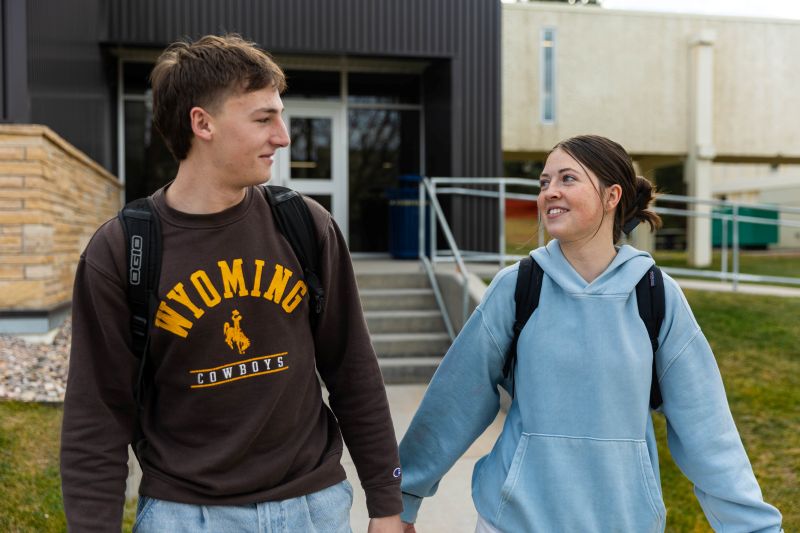 “I think that it’s important to have a plan for transfer in place, because it allows
the steps towards actually transferring to go smoothly,” said Carlee Wedemeyer, another
LCCC student in ETA who is majoring in finance and accounting. “A plan showed me what
classes I was taking through LCCC, which classes would be required through UW, and
from there, I have been able to figure out what classes would transfer and give me
an idea of what starting at UW would look like.”
“I think that it’s important to have a plan for transfer in place, because it allows
the steps towards actually transferring to go smoothly,” said Carlee Wedemeyer, another
LCCC student in ETA who is majoring in finance and accounting. “A plan showed me what
classes I was taking through LCCC, which classes would be required through UW, and
from there, I have been able to figure out what classes would transfer and give me
an idea of what starting at UW would look like.”
Why this? Why now?
Unlocking Opportunity pushed LCCC to take a closer look at how students experience college from start to finish, including how well they fare after they graduate.
Community colleges nationwide, including LCCC, made significant gains through Guided Pathways, helping more students reach graduation. But Unlocking Opportunity pushed LCCC to confront the next, harder questions: Did it matter that people earned diplomas? Were they successful when they left?
Unlocking Opportunity, a national initiative led by the Aspen Institute and the Community College Research Center, pushed LCCC to take a closer look at how students experience college from start to finish, including how well they fare after they graduate.
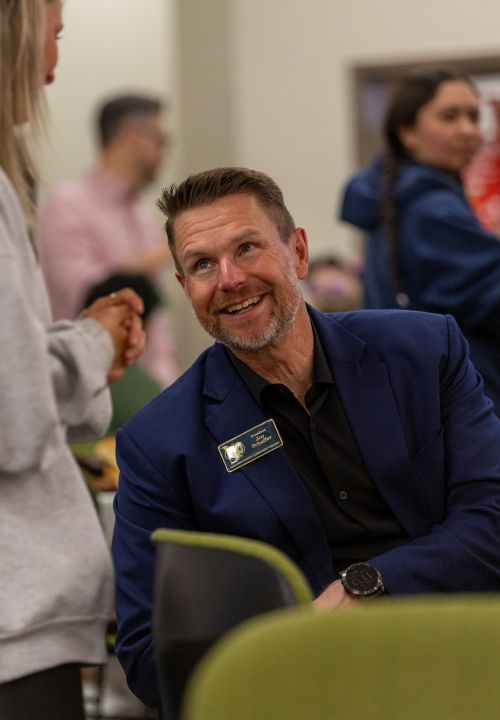 Post-completion success became the center of the work. Graduation alone wasn’t enough
if too many students continued to struggle after graduating, LCCC President Joe Schaffer
said.
Post-completion success became the center of the work. Graduation alone wasn’t enough
if too many students continued to struggle after graduating, LCCC President Joe Schaffer
said.
“Most of higher education, most community colleges, weren’t focused on what happened after the diploma was awarded,” Schaffer said.
Unlocking Opportunity, Schaffer said, offered LCCC a chance to rethink advising, program design, scheduling, transfer pathways and first-year experience with the goal of ensuring that every credential leads to real opportunity.
The effort required hundreds of hours of planning and collaboration across seven core strategies; a significant hill to climb for the college. But LCCC was chosen in part because of the demonstrated ability to accomplish remarkable tasks as an institution.
And the work that LCCC has done and continues to do in these areas could have an impact on students far from Southeast Wyoming, Schaffer said.
“We were selected … because we had demonstrated some ability to do institutional transformation at scale,” he said. “And the hope is — and now it has been — that if we can learn how to do these things, we can teach others in the field how to transform their institutions to do the same.”
Seeing something in our students
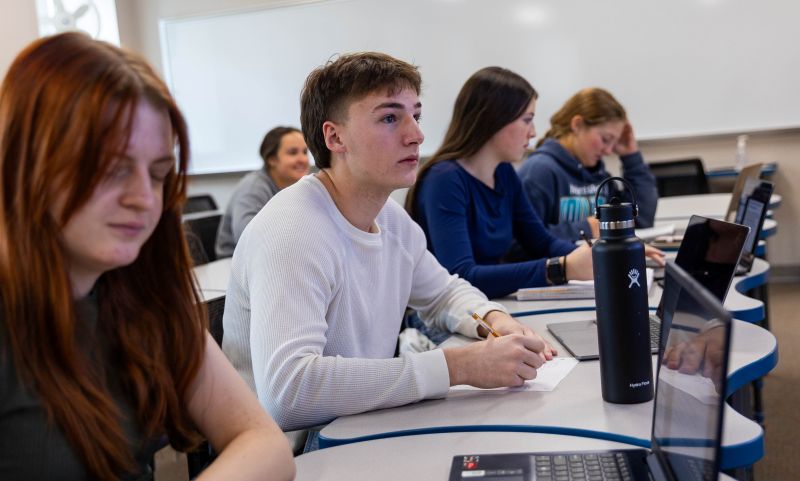 Larry, a Colorado native who moved to Cheyenne during high school, didn’t expect to
go to college.
Larry, a Colorado native who moved to Cheyenne during high school, didn’t expect to
go to college.
“My family is rooted in the oil industry; that was kind of normal for me,” he said. “Going to college was foreign to me.”
After two years working in the oil fields, Larry wanted to take his life in another direction. College seemed like a way to security in the future, and LCCC was a natural choice. But Larry still didn’t know what going to college really held in store for him.
“On the first day when I got there, I was nervous. I was scared,” Larry said with a laugh.
Upon walking through the college’s doors, however, Larry said he found people who wanted to help. The hardest part of going to college, so far, he said, was the apprehension of walking through those doors.
“My Student Success Coach gave me a quick tour of campus, and from then on, I was under her wing,” he said. “I got help every step of the way.”
From Dr. Schaffer on down, LCCC’s calls on its faculty and staff to help students achieve extraordinary goals — even when the students don’t know what they can do yet.
With some time in college under his belt, Larry said he’s still developing as a student. He said he’s not sure what his strengths are, but knows he needs to show up and be an active participant in his higher education.
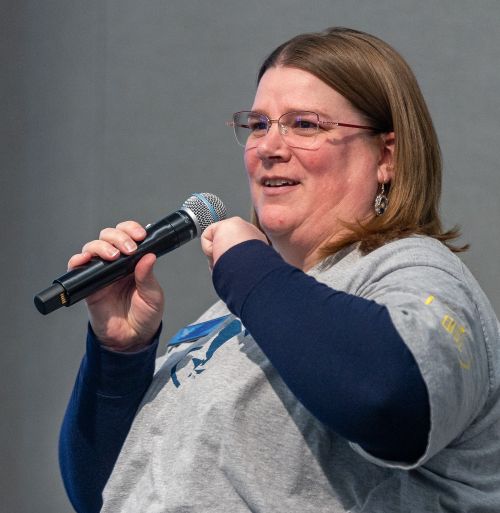 Even then, Larry said it came as something of a surprise when Carole Boughton, LCCC’s Business & Accounting Pathway coordinator, asked Larry to be a part of a
select group of students to serve on the Pathway Advisory Committee. That meant Larry
would represent students in his Pathway and speak for them, fielding questions directly
from employers and community representatives about his experience.
Even then, Larry said it came as something of a surprise when Carole Boughton, LCCC’s Business & Accounting Pathway coordinator, asked Larry to be a part of a
select group of students to serve on the Pathway Advisory Committee. That meant Larry
would represent students in his Pathway and speak for them, fielding questions directly
from employers and community representatives about his experience.
“I think she saw something in me before I saw it in myself,” he said. “I don’t miss class. I try my best on everything I turn in, so everything’s going to be the best of my ability. I participate in class. That’s about the only thing I can come up with.”
Larry said he knows it’s significant that he was chosen to represent his peers; it gives him confidence to pursue the other challenges in college.
For those who work at LCCC, the time and effort put into Unlocking Opportunity was about giving opportunities to students like Larry. The proponents who moved the work forward believe that college can offer social mobility, building the foundation for better lives and stronger communities.
The hours and work invested in those efforts, Schaffer said, demonstrate the authenticity LCCC attempts to embody.
“It amazes me just how much has occurred, how much organization, how much effort has gone into our seven strategies with Unlocking Opportunity,” Schaffer said. “We still have work to do, but so much has unfolded already.”
Seven areas where LCCC’s work is improving the student experience
1. Clear transfer pathways: Express Transfer Agreement
 For decades, students pursuing transfer degrees often moved through community colleges
without a guaranteed bridge to a bachelor’s program. Lost credits, shifting requirements
and unclear expectations made the process unpredictable. Unlocking Opportunity pushed
LCCC to confront that directly.
For decades, students pursuing transfer degrees often moved through community colleges
without a guaranteed bridge to a bachelor’s program. Lost credits, shifting requirements
and unclear expectations made the process unpredictable. Unlocking Opportunity pushed
LCCC to confront that directly.
The college responded by launching the Express Transfer Agreement with the University of Wyoming, ensuring that students in aligned programs are co-admitted, co-advised and guaranteed full credit transfer. Advising from both institutions begins early, and once students graduate from LCCC they transition into their UW programs with junior standing.
Work did not stop there. LCCC expanded the number of degrees covered by ETA and began forming new partnerships with Chadron State College and the University of Northern Colorado for students who want to stay closer to home or complete their bachelor’s degrees online. Every student’s Individualized Success Plan now includes a transfer component where applicable, naming a primary transfer partner, a specific contact at that institution and an estimated cost for completion.
The result is that LCCC students can now see their entire transfer journey, from first semester to bachelor’s degree, laid out in a way that minimizes surprises.
2. Value-added Health Sciences Pathway
The Health Sciences & Wellness Pathway enrolls nearly one-third of LCCC’s credential-seeking students, but a few years ago, the program structure left too many of them in limbo. In 2021–22, only 13 graduates earned the Associate of Science in Health Sciences. Many were waiting for selective-entry programs such as nursing, dental hygiene or sonography, and left without any credential with standalone value in the job market.
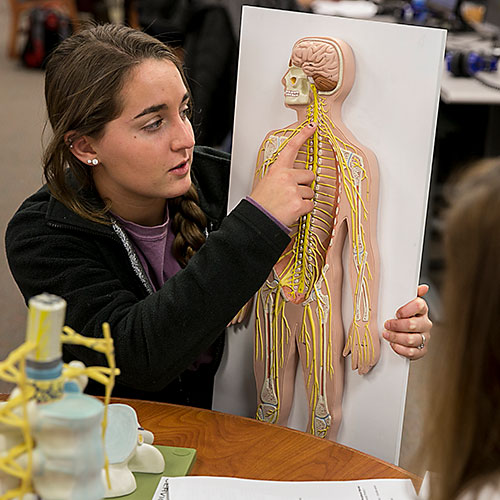 Unlocking Opportunity gave LCCC the space to redesign the pathway from the ground
up. The college introduced a new Applied Associate of Science in Health Sciences that balances preparation for competitive programs with real workforce value. The
degree now includes a shared first-year core of prerequisites across health programs,
patient-skills experiences and industry certifications such as Certified Nursing Assistant
and Medical Assisting. Those credentials can lead directly to employment while keeping
pathways open toward advanced degrees, including the Bachelor of Applied Science in Healthcare Administration.
Unlocking Opportunity gave LCCC the space to redesign the pathway from the ground
up. The college introduced a new Applied Associate of Science in Health Sciences that balances preparation for competitive programs with real workforce value. The
degree now includes a shared first-year core of prerequisites across health programs,
patient-skills experiences and industry certifications such as Certified Nursing Assistant
and Medical Assisting. Those credentials can lead directly to employment while keeping
pathways open toward advanced degrees, including the Bachelor of Applied Science in Healthcare Administration.
Faculty and staff also developed “offramp advising” to help students pivot to alternative health-related careers when a particular selective program is full, ensuring progress is not wasted.
3. Equitable dual and concurrent enrollment
Early college opportunities like dual and concurrent enrollment can significantly improve college-going and completion rates. LCCC’s data, however,
showed that access to those opportunities was not equitable, especially for first-generation
and low-income students who did not always know how to enroll or apply credits toward
a credential.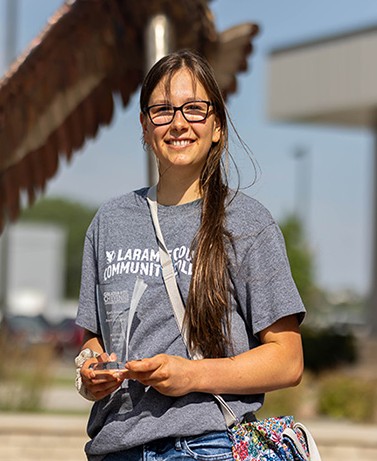
To close those gaps, the college created Accelerate, a pilot program starting with 10th graders in all four LCSD1 high schools — Central, East, South and Triumph. The program introduces students to career exploration, academic planning and dual-credit enrollment with intentional structure. Each student works with an Accelerate coach and high school counselor to build a personalized roadmap through high school graduation and into college.
Financial barriers are removed. Students can take as many LCCC dual-credit courses as fit their plan at no cost, and those who complete Accelerate and enroll at LCCC receive a full year of free tuition and fees. Funded by the Elbogen Foundation, Meta and the Sturm Family Foundation, the program has already seen strong participation, with more than 80 applicants in its first cohort.
4. Individualized Success Plans
 Too many students arrive at college without a clear sense of how their courses connect
to their goals. Unlocking Opportunity spurred LCCC to create Individualized Success
Plans, developed collaboratively between students and their Success Coaches in the
first semester.
Too many students arrive at college without a clear sense of how their courses connect
to their goals. Unlocking Opportunity spurred LCCC to create Individualized Success
Plans, developed collaboratively between students and their Success Coaches in the
first semester.
These plans capture career interests, course sequences, personal barriers and financial details, including cost estimates and aid information. For students intending to transfer, the plan integrates an explicit transfer path.
Individualized Success Plans are updated each semester and visible to students, coaches and instructors. They are now fully embedded in the STRT 1000 course, which means every new student develops a complete, living roadmap early in their LCCC experience.
5. STRT 1000 reboot
LCCC’s first-year success course, STRT 1000, once varied widely by instructor and lacked a consistent college-wide purpose. Unlocking Opportunity provided a framework to rebuild the course using the Community College Research Center’s Ask–Connect–Inspire–Plan model.
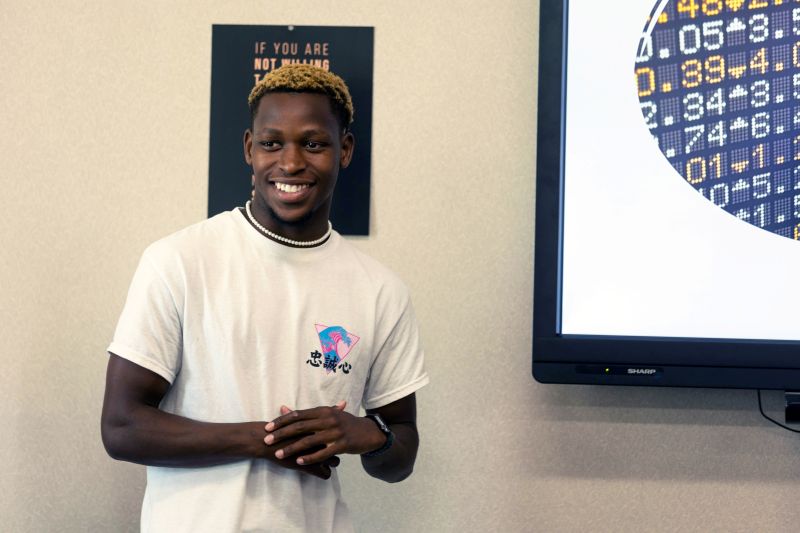 Now the course centers on helping students navigate college systems, connect with
faculty and peers in their Pathway, explore careers and articulate goals. Each student
leaves STRT 1000 with an Individualized Success Plan. Faculty across all eight Pathways collaborated to customize assignments for their disciplines, often bringing in local
employers and project-based learning. Early feedback shows stronger engagement and
clearer direction among first-year students.
Now the course centers on helping students navigate college systems, connect with
faculty and peers in their Pathway, explore careers and articulate goals. Each student
leaves STRT 1000 with an Individualized Success Plan. Faculty across all eight Pathways collaborated to customize assignments for their disciplines, often bringing in local
employers and project-based learning. Early feedback shows stronger engagement and
clearer direction among first-year students.
6. Student-focused course scheduling
LCCC’s students often balance college with work and family, yet course schedules historically concentrated classes between 9 a.m. and 2 p.m., Monday through Thursday. Many students struggled to enroll in the classes they needed, slowing their progress.
 In response, LCCC developed a student-focused scheduling model. Using enrollment and feedback data, the college increased evening, weekend and online offerings and expanded the use
of 8-week terms. Students can now focus on fewer classes at a time while maintaining
full-time status. The scheduling system also allows students to register for an entire
academic year at once, helping them plan around work schedules and family obligations.
Each Pathway is working toward a schedule that would allow students to complete entire
degrees through 8-week terms alone.
In response, LCCC developed a student-focused scheduling model. Using enrollment and feedback data, the college increased evening, weekend and online offerings and expanded the use
of 8-week terms. Students can now focus on fewer classes at a time while maintaining
full-time status. The scheduling system also allows students to register for an entire
academic year at once, helping them plan around work schedules and family obligations.
Each Pathway is working toward a schedule that would allow students to complete entire
degrees through 8-week terms alone.
7. LCCC Student Experience
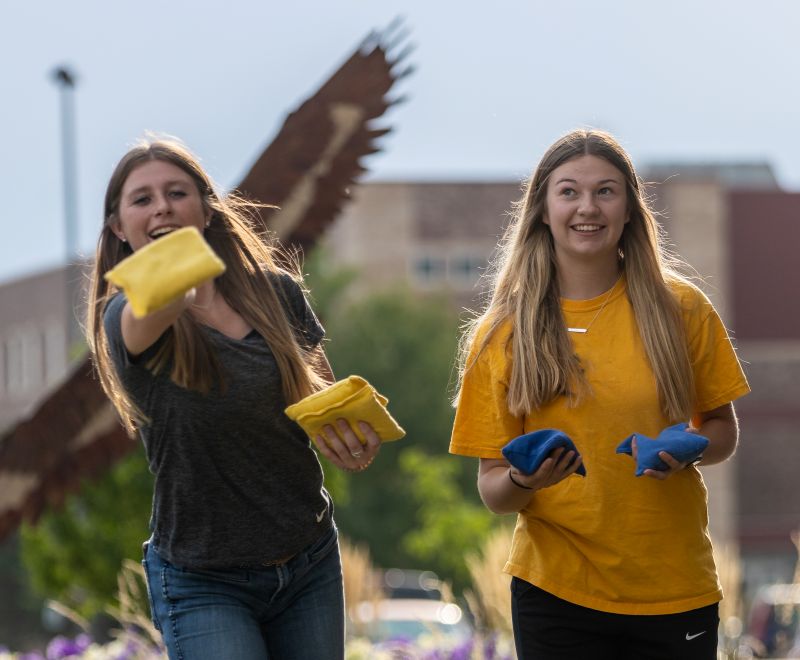 Structural changes alone do not define a college experience. Unlocking Opportunity
led LCCC to bring key functions together under a new Office of Student Experience,
led by LCCC's First Chief Experience Officer Dr. Jill Koslosky. The office focuses on ensuring that every student has access to three essential
experiences: building positive relationships, engaging in real-world learning such
as internships or research, and synthesizing their education through reflection and
application.
Structural changes alone do not define a college experience. Unlocking Opportunity
led LCCC to bring key functions together under a new Office of Student Experience,
led by LCCC's First Chief Experience Officer Dr. Jill Koslosky. The office focuses on ensuring that every student has access to three essential
experiences: building positive relationships, engaging in real-world learning such
as internships or research, and synthesizing their education through reflection and
application.
Teams from learning, engagement and recruitment — including roles such as Learning Experience Coordinator Amanda Brown, Recruitment Experience Coordinator Justine Essex and Student Engagement & Community Coordinator Angela Davis — now work under one umbrella to support those goals. The structure is designed to make the student journey at LCCC more cohesive and intentional from the first point of contact through graduation.