
Equine Management Program
What will I learn?
Horses have a unique role in Wyoming’s tourism and recreation industries among others. Management of equine facilities is critical to the success of businesses in areas such as horse boarding, training and recreation.
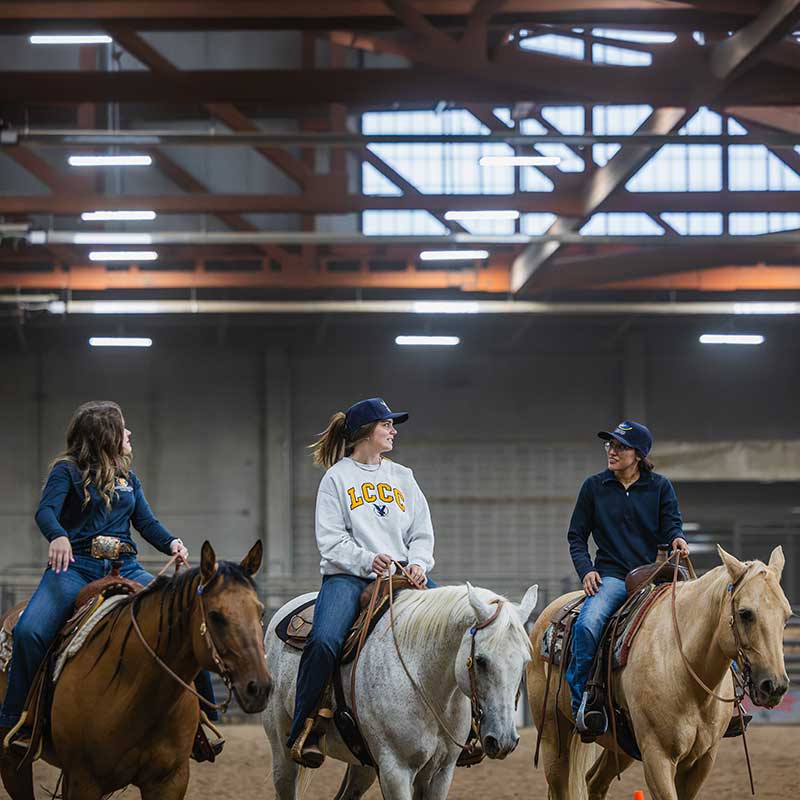
LCCC's equine program is hands-on, teaching students practical skills including:
- Equine growth, development, reproduction and nutrition
- Business and management for the equine industry
- Horse training and behavior
This program includes an equine internship.
What degree will I earn?
Credit Diploma
The Equine Management Credit Diploma prepares students for work in the field of equine training and management. Students will gain an overall understanding of equine anatomy, physiology, nutritional needs, and proper evaluation of a horse. Students will gain knowledge and skills necessary to prepare them for an internship in their chosen field, which will ultimately prepare them for work in the equine industry in careers such as managing a horse boarding, training or recreation facility.
Available at the Cheyenne main campus.
What can I do with this degree?
Graduates may find jobs as:
Visit Career Coach for additional information about Animal Breeders.
Visit Career Coach for additional information about Farmworkers, Farm, Ranch, and Aquacultural Animals.
Visit Career Coach for additional information about First-Line Supervisors of Animal Husbandry and Animal Care Workers.
Visit LCCC's Career Resources to find tools for selecting the right program for you and marketing yourself to future employers.


Equine Activities
Whether an equine major, or any other major on campus, LCCC students have the opportunity to participate in ag and equine activities outside of the classroom. Students may participate in clubs like the livestock show team, livestock judging team, ranch horse team, block and bridle club, intercollegiate horse show association team and rodeo team in addition to industry field trips and internships.
How much will it cost?
For general college expenses, students should view LCCC’s cost of attendance. There are additional fees for certain courses involving horses.
 Frequently Asked Questions about the Equine Management Program at LCCC:
Do I need previous experience working with horses?
Previous equine experience is helpful, but not required. Students with a strong interest in the equine industry and a willingness to learn through hands-on experiences can be successful in the program. Students with existing equine skills will have opportunities to build on their experience and develop more advanced knowledge.
Do I need to own a horse to enroll in the program?
No. Students have access to horses leased through local partners for hands-on learning. Students may also bring their own horse to use in the program with instructor approval.
Can students participate in equine activities if they are not Equine Management majors?
Yes. LCCC offers agriculture and equine activities to students from multiple majors. Learn about the Ag Equine Teams and Clubs.
What equine activities are available outside the classroom?
Students can expand their experience through LCCC’s IHSA Equestrian and Ranch Horse teams, along with other clubs and activities. You do not need to be enrolled in Equine Management to participate on an equine team.
How long will it take to earn this degree?
This credit diploma typically takes a full-time student one year (two semesters) to complete.
Want to keep going?
The credit diploma can be the first step toward an associate degree. After completing the one-year program, students can continue into LCCC’s Agriculture & Equine AAS, with a pathway designed to allow most students to complete the associate degree in about one additional year.